


Stuart Barker - Mindset Over Mayhem:
What Battlefield Psychology Can Teach Business Leaders About Performing Under Pressure

When people think about elite military performance, they often imagine courage, discipline and physical endurance.
What they don't always appreciate is that success on the battlefield is rarely about being fearless. It's about making good decisions when fear, uncertainty and chaos are at their highest.
The battlefield and the boardroom may seem worlds apart, but the psychology of performing under pressure remains the same.
Whether you're leading a sales team through a difficult quarter, negotiating a multi-million-pound contract, managing organisational change or responding to an unexpected crisis, your brain reacts to pressure in much the same way as a soldier's does under fire.
The environment may be different... The psychology is the same.
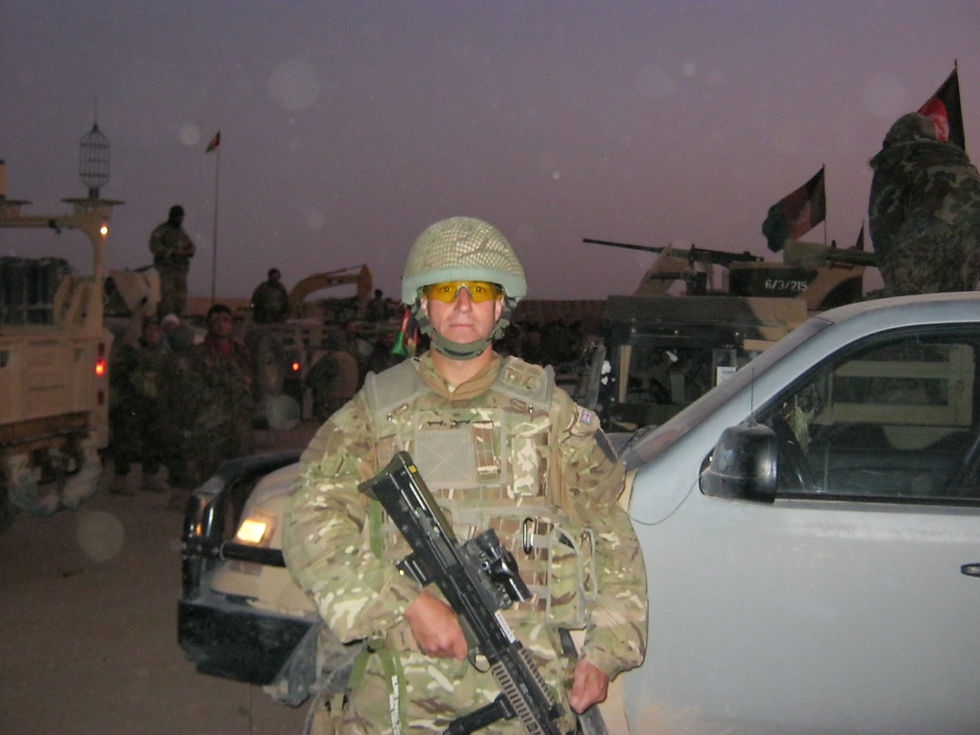
Different Battlefield. Same Brain.
Pressure changes the way we think.
As stress levels rise, adrenaline increases, our thinking narrows, emotions take over and we become more reactive. In military operations this is known as the "fog of war." In business, it appears as incomplete information, conflicting priorities, difficult customers, tight deadlines and rapidly changing markets.
Many leaders assume pressure reveals capability.
In reality, pressure often exposes whether or not we have trained ourselves to think clearly under stress.
High performance isn't about avoiding pressure... It's about learning how to perform despite it.
Emotional Control Comes Before Leadership
One of the biggest lessons military leaders learn is simple:
You cannot stabilise the situation until you stabilise yourself.
When pressure spikes, people naturally want to react quickly.
Elite performers do the opposite.
They pause.
They breathe.
They widen their thinking before making decisions.
Simple techniques such as tactical breathing, brief mental resets and slowing down your decision-making process allow the brain to regain control over emotional reactions.
In sales and leadership, these few seconds can be the difference between escalating a problem and solving it.
Great Decisions Follow a Process
One of the most powerful tools used within UK emergency services and military planning is the National Decision Model (NDM).

Rather than relying on instinct alone, the model encourages leaders to think through key stages:
Start with your values
Gather reliable information
Assess risks
Consider policies and constraints
Explore options
Act, review and learn
While developed for critical incidents, the framework transfers remarkably well into commercial leadership.
Whether dealing with a difficult client, pricing decisions or organisational change, structured thinking consistently outperforms emotional reactions.
When everything feels chaotic, a proven decision-making process creates clarity.

Leadership Under Pressure Is About Awareness
One of the most powerful moments in Stuart's keynote uses real helmet camera footage from military operations.
Not because audiences need to see combat.
But because they immediately recognise the psychological challenges.
Incomplete information.
Rapidly changing circumstances.
Communication under pressure.
Competing priorities.
The footage becomes a mirror rather than entertainment.
Business leaders quickly see that their own high-pressure moments require many of the same skills:
Staying calm
Maintaining situational awareness
Communicating clearly
Avoiding tunnel vision
Trusting training rather than emotion
The lessons become instantly transferable.
High-Performing Teams Behave Differently
Military teams don't succeed because they have the smartest individuals.
They succeed because they operate together under pressure.
Many battlefield behaviours translate directly into successful organisations:
Battlefield | Business |
Distributed decision-making | Empower people to make decisions without bottlenecks |
Situational awareness | Maintain visibility across teams and projects |
Prioritisation under pressure | Protect the activities that create the greatest value |
Calm leadership | Emotional stability spreads throughout organisations |
Debrief culture | Learn continuously without assigning blame |
These aren't military concepts...They're simply high-performance behaviours.
Pressure Is Normal
One of the biggest mindset shifts for leaders is understanding that stress is not a sign of weakness...It's biology.
Elite military units don't expect pressure to disappear.
They train for it.
They rehearse difficult situations long before they experience them for real.
The same principle applies to business.
Leaders who prepare for uncertainty respond more effectively when challenges inevitably arise.
They don't panic...They perform.

A Practical Toolkit for Every Leader
The goal isn't to make business leaders think like soldiers.
It's to help them think more clearly when it matters most.
By applying practical tools such as structured decision-making, emotional regulation, effective communication and disciplined reflection, leaders can improve performance across sales, operations and executive leadership.
High-performing organisations aren't defined by the absence of pressure.
They're defined by how well they perform when pressure arrives.
Take the Learning Beyond the Keynote
While Mindset Over Mayhem is a powerful keynote designed to inspire and challenge audiences, it is also available as an interactive workshop for organisations looking to embed these principles into everyday leadership and decision-making.
The workshop moves beyond theory, giving leaders and teams practical tools they can immediately apply in high-pressure situations. Participants explore how to regulate stress, make better decisions under pressure, improve communication during uncertainty, and build the behaviours that underpin high-performing teams.
Using realistic business scenarios, group discussions and practical exercises - alongside lessons drawn from military leadership - the workshop helps organisations develop a shared approach to performing under pressure.
Whether delivered as a half-day, full-day or tailored leadership programme, the workshop is designed to create lasting behavioural change, not just inspiration.
Ideal for:
Senior leadership teams
Sales leaders and commercial teams
Operational and project managers
Organisations navigating growth, change or uncertainty
Leadership development programmes and away days
Because learning doesn't end when the keynote finishes - it begins when people start applying it.
Final Thoughts
The battlefield and the boardroom may appear worlds apart.
Yet both demand clear thinking, emotional control and decisive leadership when uncertainty is at its highest.
The organisations that thrive aren't necessarily those with the most resources.
They're the ones whose leaders have developed the mindset to stay calm, think clearly and lead effectively when others become overwhelmed.
Because pressure is inevitable...Mayhem is optional.
Interested in Bringing Mindset Over Mayhem to Your Organisation?
Stuart's keynote/workshops combine real operational experience from military leadership with practical, evidence-based strategies that help leaders and sales teams improve decision-making, resilience and performance under pressure.
Whether you're hosting a leadership conference, sales event or would like one of Stuart's workshops to form part of your business improvement programme, Mindset Over Mayhem provides practical tools your audience can apply immediately.
Get in touch today to discuss keynote speaking, workshops or leadership development programmes.



Comments