


The Fine Art of Improvisation: Why Human Beings Need to Get Better at the Unexpected

Human Beings...We’re complicated things.
We plan. We prepare. We create strategies, processes and structures designed to help everything run smoothly.
And then life happens.
The unexpected arrives, the plan goes out of the window and, quite often, we fall back on the same familiar behaviours we’ve always relied upon.
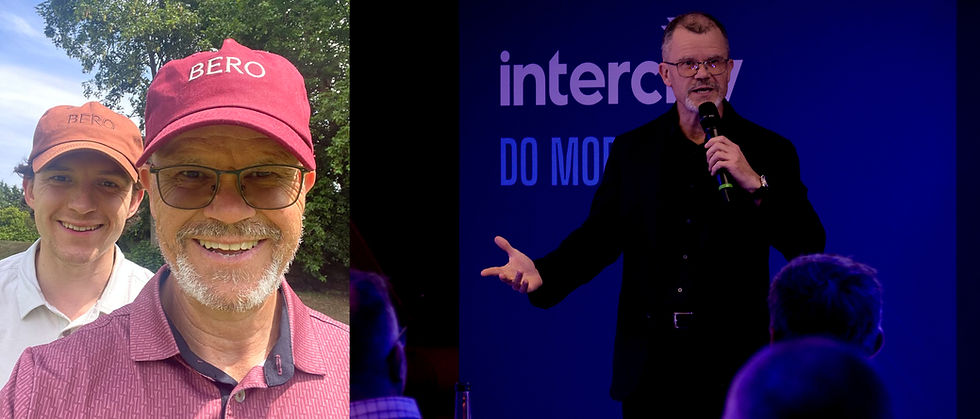
This is where John Cremer comes in.
John is a highly experienced speaker, facilitator and improvisation specialist whose sessions explore human behaviour, communication and the way we interact with the people around us.
At Professional Guest Speakers, we already know John for his fascinating Reading People sessions. His Fine Art of Improvisation takes another approach to understanding those wonderfully unpredictable creatures we call… Human Beings.
What happens when the script disappears?
John's starting point is simple.
No matter how carefully we plan, we cannot control everything.
When circumstances change or pressure increases, our natural response can be to retreat towards familiar patterns of behaviour. Our options narrow at precisely the moment when we need greater flexibility.
Collaboration can become isolation. Curiosity can become caution. And the authenticity and vulnerability we value in good leaders can suddenly become much harder to demonstrate.
The Fine Art of Improvisation challenges those instincts.
Rather than trying to control the unexpected, John helps people become more comfortable operating within it.

Learning from improvisation
There is much more to improvisation than being quick or funny.
Professional performers develop the ability to listen, respond, collaborate and build upon what somebody else gives them - without knowing exactly where the conversation is going next.
Those same skills have enormous relevance in business.
John creates a psychologically safe environment where people are encouraged to experiment, explore and, importantly, be their imperfect selves.
Through a series of engaging exercises and structures, participants experience techniques used by performers to deal with unplanned moments.
• There is no pressure to be the funniest person in the room.
• There is no expectation to have the cleverest answer.
• There will, however, be plenty of laughter.
• And beneath that laughter is some serious learning.
From the stage to the workplace
The techniques John explores can be applied directly to everyday working situations.
Stepping into the unknown. Dealing with an unexpected question. Engaging with a client. Listening properly to a colleague. Working collaboratively. Presenting an idea. Solving a problem when the obvious answer isn't working.
Instead of automatically reaching for an established response, participants begin to recognise that there may be several possible ways forward.
That ability to remain open, curious and responsive can be particularly valuable for leaders and teams operating in environments where change has become the norm rather than the exception.

Rediscovering our creative side
One of the most interesting ideas behind John's work is that creativity isn't something reserved for a particular type of person.
We are all naturally creative.
As Human Beings, we've spent our lives absorbing information, learning behaviours and developing ways of navigating the world around us.
But somewhere along the way, education, workplace structures, expectations and the fear of getting things wrong can encourage us to suppress some of that natural curiosity.
John's sessions give people permission to rediscover it.
When people feel psychologically safe enough to experiment, play and occasionally get things wrong, something changes.
Ideas begin to flow - People listen differently - Teams become more connected.
And individuals who might ordinarily remain quiet can discover the confidence to contribute.
Serious outcomes without taking ourselves too seriously
John has delivered his work to organisations and audiences around the world, with benefits that extend well beyond the session itself.
At an individual level, improvisation can develop confidence, resilience, agility, listening, problem-solving, influencing and presentation skills.
At a team level, it can strengthen trust, rapport and collaboration while helping people appreciate different personalities, perspectives and ways of thinking.
And at an organisational level, the techniques can help create a culture that is more receptive to new ideas, different viewpoints and unexpected challenges.
Perhaps most importantly, people tend to laugh together.
And sometimes Human Beings work rather better when they do.

John Cremer - The Fine Art of Improvisation
The Fine Art of Improvisation is not about turning your leadership team into comedians.
It's about helping people become better listeners, more confident collaborators and more adaptable thinkers.
It challenges us to become a little more comfortable when we don't know exactly what's coming next.
Because however good the strategy, however detailed the plan and however sophisticated the process…
Human Beings are still Human Beings.
And sometimes the ability to improvise is exactly what we need.
John Cremer is available through Professional Guest Speakers for conferences, leadership events, team sessions and interactive workshops. His sessions can be tailored to the audience and objectives of the event.
For availability, fees or to discuss how John could work with your organisation, contact the Professional Guest Speakers team.



Comments